strategyai-transformationguide
Announcing the AI Strategy Guide
DiffLab publishes the AI Strategy Guide — a practical plan for doubling the productivity of the people at your company, sequencing the change, and sharing the result.
Read more →Research updates, product launches, and insights from our team.
DiffLab publishes the AI Strategy Guide — a practical plan for doubling the productivity of the people at your company, sequencing the change, and sharing the result.
Read more →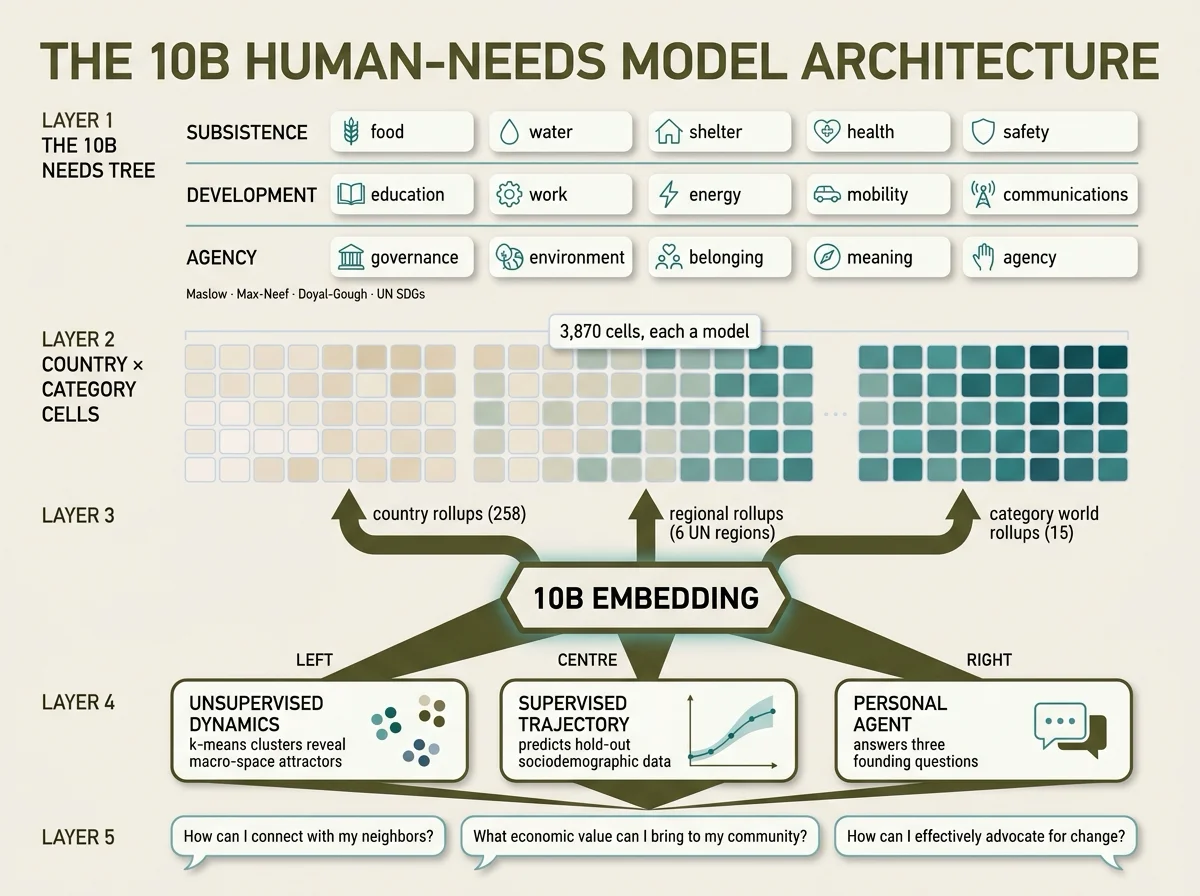
An open-source model of high-level human needs — part of our approach to modeling and simulation, so agents can help answer what problems a business or community can tackle next.
Read more →A talk on AI software factories — how organizations industrialize AI-native software development with custom control surfaces and production systems.
If you're building agentic systems that process untrusted input, you need a fast first filter before anything reaches your LLM. prompt-bonk is a zero-dependency regex scanner that runs in under 1ms and catches the attacks that break your system — not the ones that produce rude text.
Read more →Safety, alignment, and boundary enforcement are as much a system problem as a model problem. Our new research preview maps four ways state of the art AI boundary enforcement breaks down — and what to do about it.
Read more →DiffLab publishes TuneOut, an open research guide to cognitive security — practical techniques for reclaiming your attention from algorithmic manipulation using AI-powered information filtering.
Read more →